17–19 June 2026 | Dhundi – Lady Leg – Beas Kund – ChandrataAl
Some journeys are planned months in advance, while others become memorable because of the people you meet and the unexpected experiences along the way.
My Beas Kund trek in June 2026 was one such journey. What started as a solo trekking plan with Himtrek from Chandigarh turned into an adventure filled with beautiful mountain trails, unpredictable mountain weather, photography, a little midnight panic, lots of laughter, and an unplanned road trip to one of the most beautiful high-altitude lakes in Himachal Pradesh.
I went to the mountains looking for a break from city life, but returned with a new trekking companion, countless photographs and memories that I will cherish for a long time.
This is the story of those three days.
Day 0: Leaving Chandigarh – The Mountains Were Calling
It was 17 June 2026, and the excitement of another Himalayan adventure had finally taken over.
I started my journey from Chandigarh at 3:15 PM, boarding a regular HRTC bus towards Manali. Nothing fancy, just a bus ticket, my backpack, a camera and the excitement of heading towards the mountains. Little did I know that the bus journey itself would provide some entertaining moments!
The bus driver was from Haryana, and anyone familiar with Haryanvi humour knows that conversations can sometimes be more entertaining than the destination itself.
At one point, a passenger wanted to get down just before Bahanu Bridge. He politely asked the driver, “Utaarde bhai!”
Without missing a beat, the driver replied sarcastically in Haryanvi:
“Ke karega uttar ke bhai? Baitha reh, mahara dil lagga rahega!”
The entire exchange was hilarious. It was one of those typical Haryanvi responses where a simple request turns into an impromptu comedy show.
But that wasn’t the end of the entertainment.
Another passenger made a ticket payment using the Airtel Payments Bank app. Unfortunately, the payment hadn’t reflected on the conductor’s end. The conductor, who was clearly in no mood to entertain digital payment complications, became furious.
He responded in his unmistakable Haryanvi accent:
“Hamme bewakoof bana ra sai! Hamme na pata Airtel Bank kona hove, PNB-SBI bank hove!”
His frustration was quite something to witness. Apparently, for him, PNB and SBI were proper banks, and everything else needed some serious explanation!
The bus journey continued with these little episodes adding an unexpected dose of comedy to the trip.
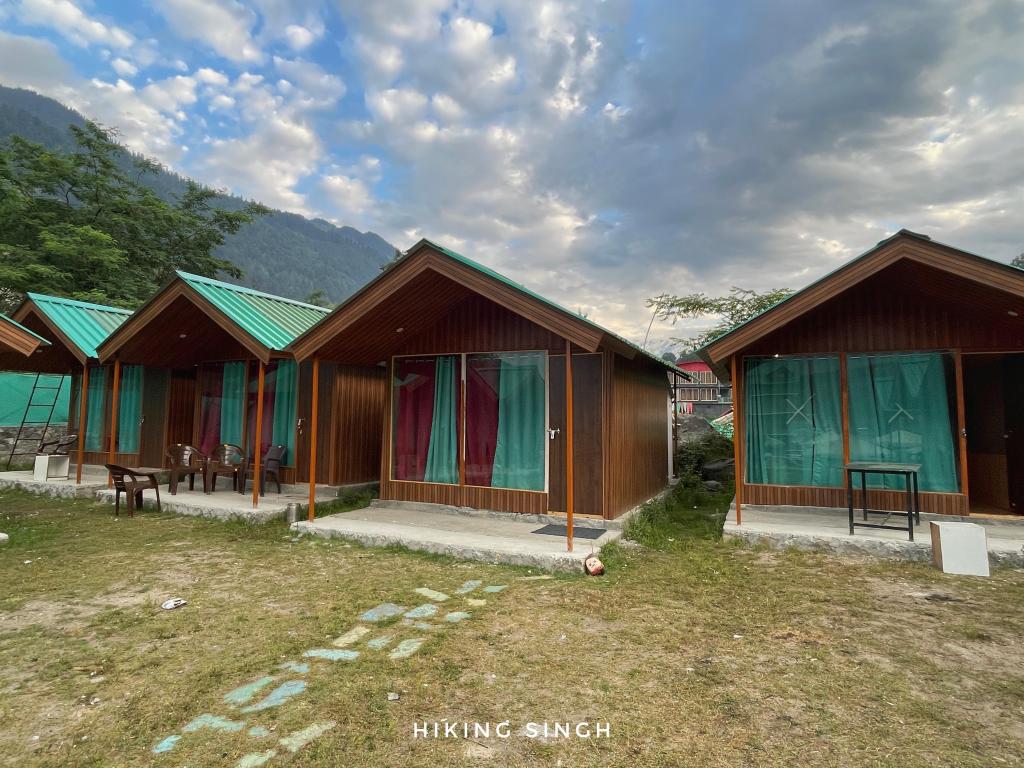
As the bus moved further towards Manali, the familiar city landscape gradually gave way to winding roads, hills and the beautiful scenery of Himachal Pradesh. I reached Bahanu Bridge, just before Manali ISBT, at approximately 11:10 PM. Rather than travelling further into Manali at that hour, I decided to spend the night at Soma Caves – A Mountain Retreat. It was a quiet mountain stay, just what I needed before the trek. I checked in, settled down, and called it a night. It costed me just Rs. 1500 for a day including breakfast.
The actual adventure was about to begin the following morning.
Day 1: From Manali to Dhundi – The Trek Begins
The morning of 18 June started early.
I walked towards the main road, crossed Bahanu Bridge and caught a local bus to Manali ISBT at around 7:30 AM. After reaching Manali Bus Stand, I boarded the bus at 8:20 AM heading towards Dhundi village, the starting point of the Beas Kund trek. The journey towards Dhundi was beautiful in itself. The road gradually took us away from the familiar tourist areas of Manali and deeper into the mountains. The landscape became more dramatic, with towering peaks, flowing streams and the sound of the Beas River accompanying us.
Dhundi is situated at approximately 2,840 metres and serves as the roadhead for the Beas Kund trail. The route climbs through mountain forests and alpine meadows before reaching the rocky glacial landscape around Beas Kund. I had planned this trek as a solo adventure. However, as often happens in the mountains, solo journeys have a way of introducing you to interesting people.
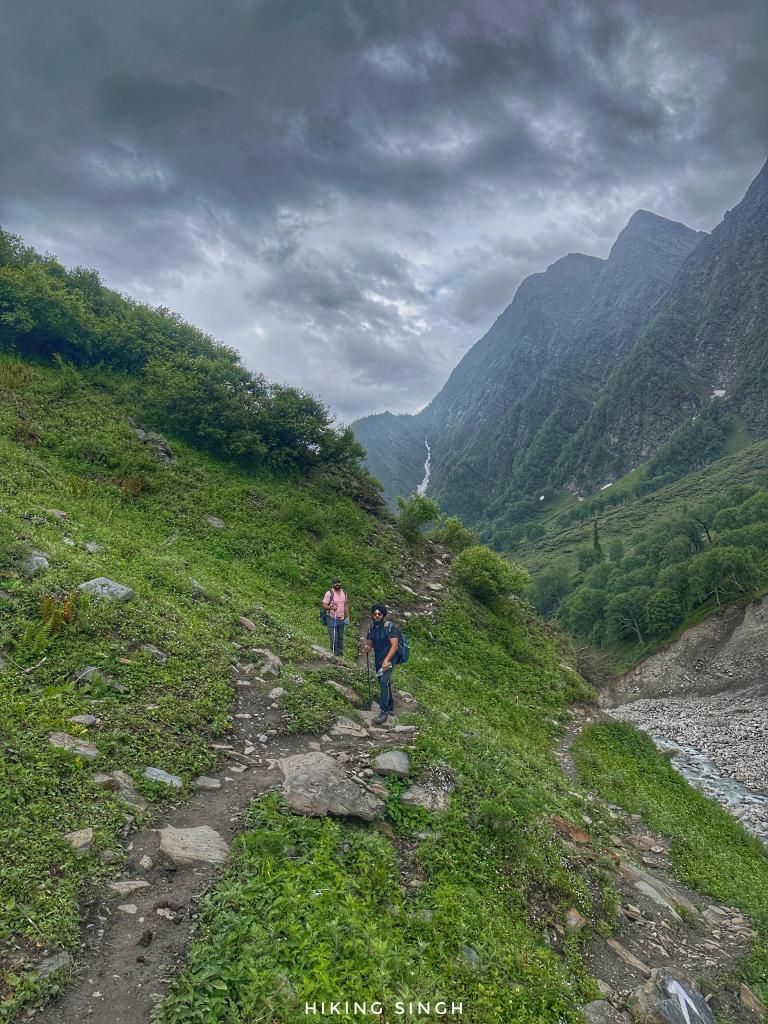
At Dhundi, I met another trekker named Sarbjit Singh from Punjab. We exchanged a few words and soon discovered that we were heading for the same destination. We decided to trek together. Our guide from Himtrek was also with us. After getting ourselves organized, we finally started walking at 10:40 AM.
And just like that, our Beas Kund adventure was underway.
The trail to Lady Leg: Rocky paths and rain
The initial excitement of starting a new trek was wonderful. The trail offered a beautiful combination of mountain scenery, rocky stretches, open landscapes and views that kept getting better as we gained altitude.
Being someone who enjoys photography, I found myself stopping frequently to capture the surroundings. Every turn seemed to offer a new frame. Sometimes it was the flowing mountain streams, sometimes the dramatic mountain slopes, and at other times the clouds moving across the peaks.
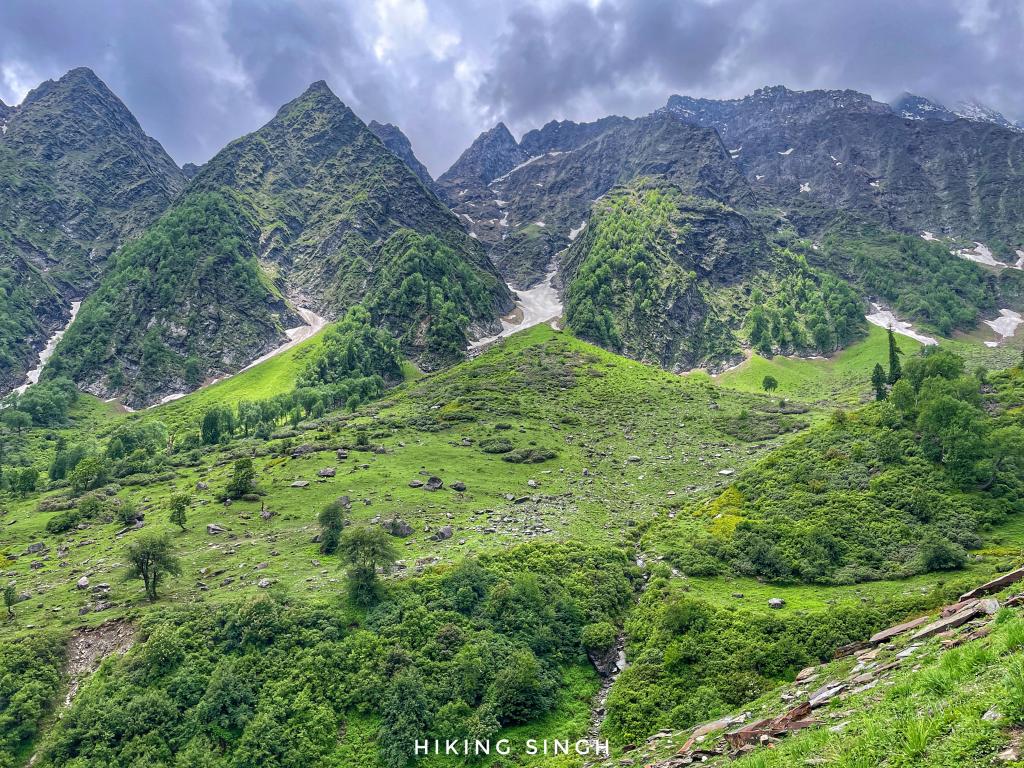
The trail was not entirely easy-going. There were plenty of rocky sections, and the weather decided to test us along the way. It started raining midway through the trek. Thankfully, we had carried our raincoats, which turned out to be extremely useful. They protected both us and our trekking backpacks from getting soaked.
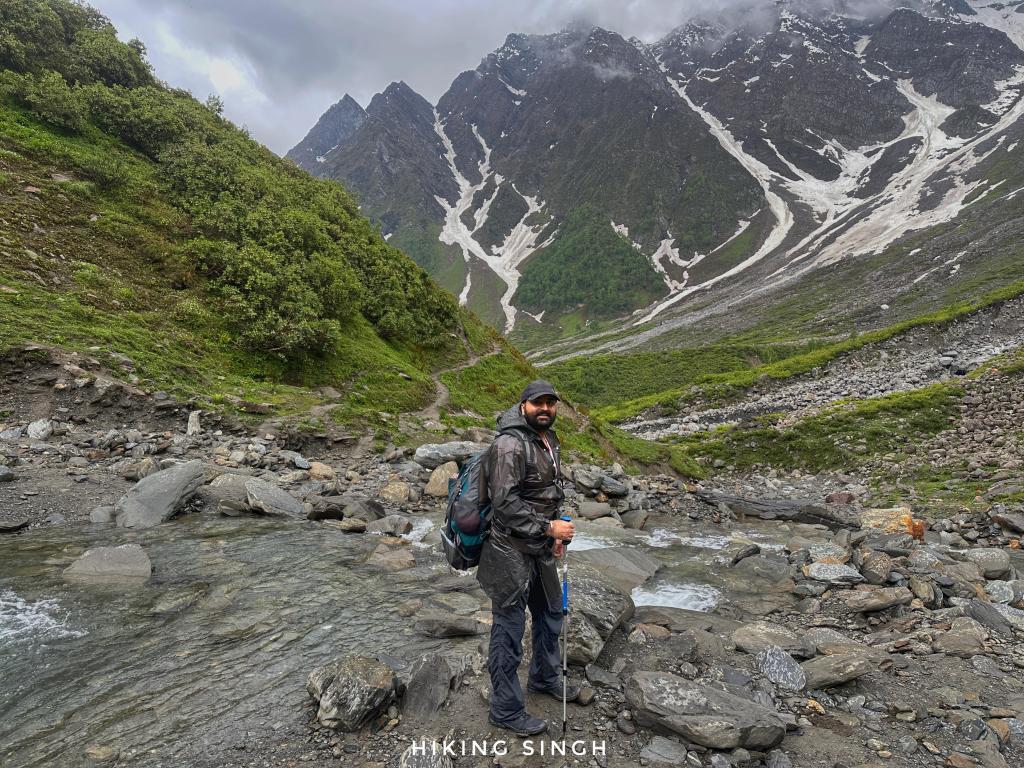
However, the rain made the trail slippery, particularly over the rocky sections. We had to be extra careful with every step. It was one of those moments when you realize that mountain weather can change quickly, and being prepared is just as important as being physically fit.
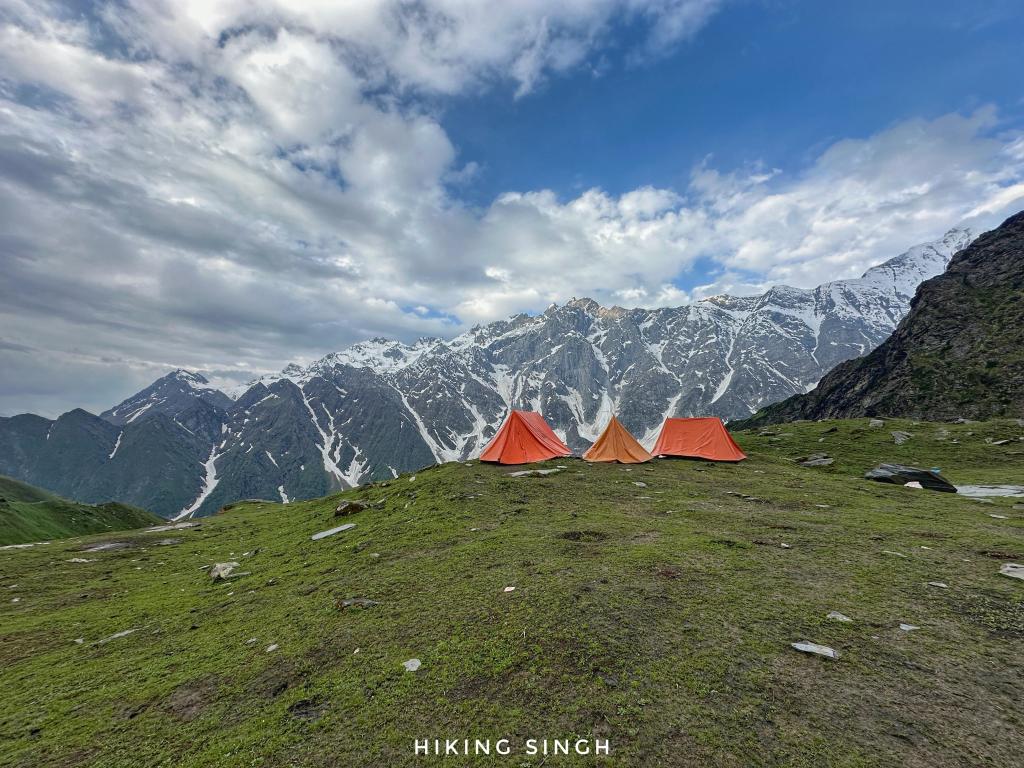
Despite the rain and difficult patches, the journey was thoroughly enjoyable. We continued taking photographs, enjoying conversations and helping each other through the tricky sections. After several hours of walking, we finally reached Lady Leg at around 4:00 PM. There is something special about reaching a campsite after a long day of trekking. Your legs may be tired, but the satisfaction of being surrounded by mountains makes everything worthwhile.
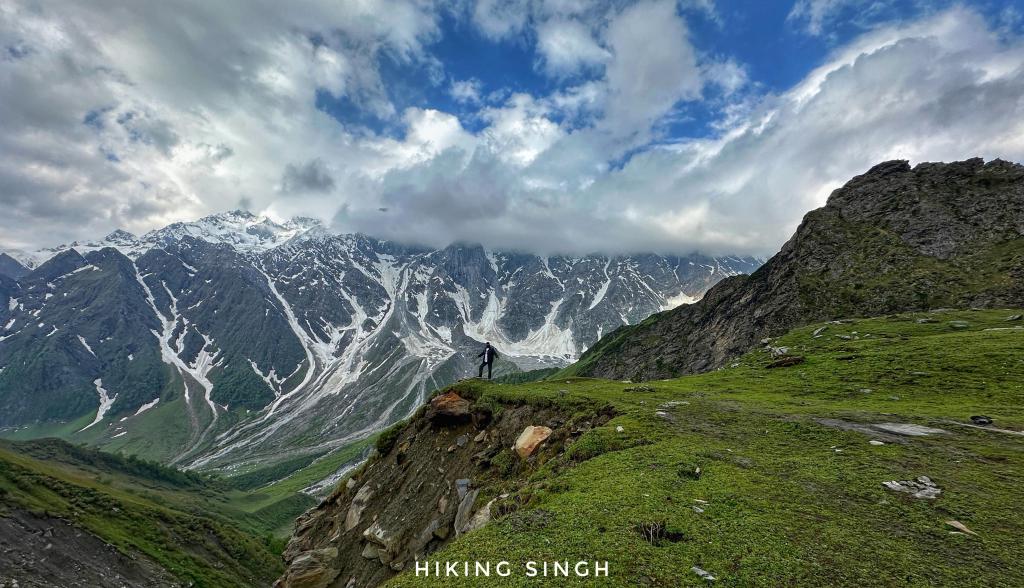
Our tents were already set up. We settled down, freshened up and took some time to enjoy the surroundings. The evening was simple but beautiful. We had hot Maggi and tea, which tasted absolutely wonderful after a tiring day on the trail. As the evening progressed, the weather cleared enough for us to enjoy the mountain atmosphere.
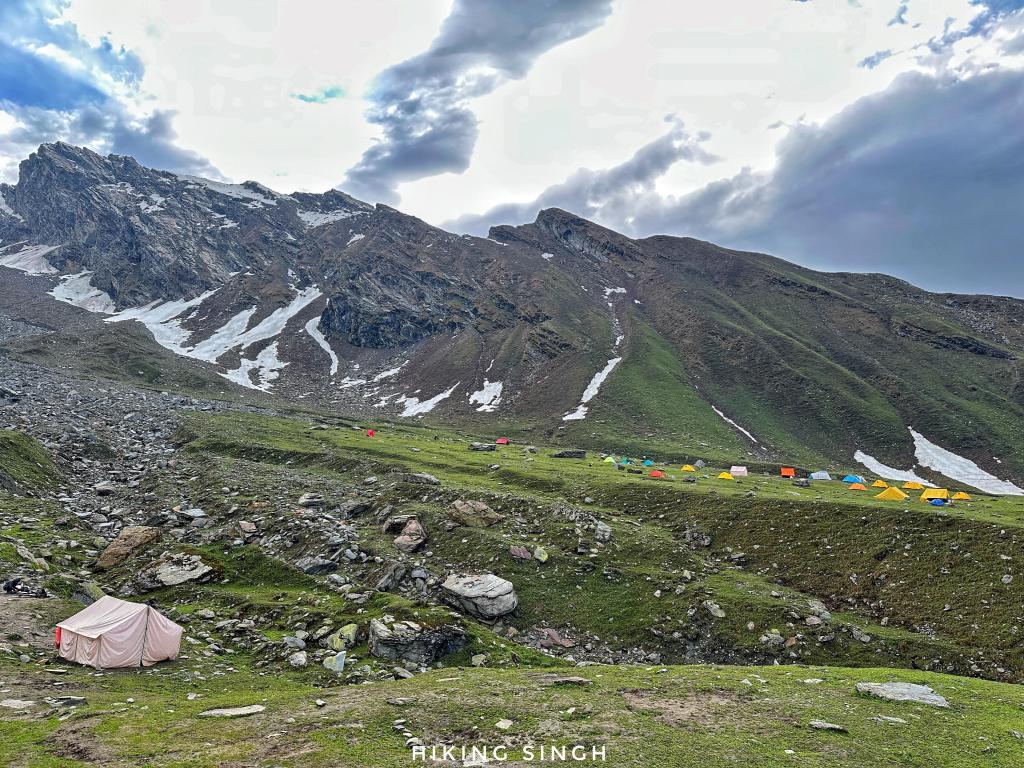
Later, we were served a sumptuous dinner at the campsite. The best part was the night sky. Away from the lights and noise of the city, the mountains offered a completely different kind of silence. We sat under the stars, enjoyed the peaceful surroundings and eventually retired to our tents.
Little did I know that the most memorable incident of the trek was still waiting for us.
The Midnight Mystery: Where Did Sarbjit Disappear?
It was around 12:15 AM when I suddenly woke up. Something seemed unusual. I realized that Sarbjit was not in our tent. Initially, I thought he might have stepped outside for some reason. But when I looked around, I couldn’t find him anywhere. There were around six or seven tents at the campsite, but ours was the only occupied camp. The other tents were empty. I immediately informed our guide from Himtrek, and both of us started searching for him.
We picked up our torches and began checking the campsite and the surrounding areas. We looked around the tents, walked through nearby patches and repeatedly called out his name. But there was no response. We shouted loudly, hoping he would hear us and respond. Nothing!
For those few minutes, the situation became genuinely frightening. We were at a high-altitude campsite, surrounded by mountains, in the middle of the night. There was hardly anyone around, and we had no idea where he could have gone. My mind started imagining all sorts of possibilities.
After searching around the campsite without success, we decided to check the nearby empty tents as well. And guess what? We finally found Sarbjit peacefully sleeping in another tent! Yes, he had simply shifted to a different tent and was sleeping comfortably while we were busy conducting a midnight search operation.
The next morning, we asked him what had happened and why he had disappeared without informing us. His answer left us laughing. Apparently, my snoring had made it impossible for him to sleep!
So, instead of waking me up or complaining, he had quietly moved to another tent. We had a great laugh about it over breakfast the next morning. It was easily one of the funniest memories of the entire trip. Sometimes, it is these completely unexpected incidents that make a trek unforgettable.
Day 2: The Final Ascent to Beas Kund
We woke up the next morning, had breakfast and prepared ourselves for the next leg of the adventure. The mountain atmosphere was refreshing, and the excitement of finally reaching Beas Kund was building. While having breakfast, we also noticed a group of mountaineers preparing for their expedition towards Friendship Peak.
It was fascinating to watch them getting ready for a much more demanding mountain adventure. Friendship Peak is one of the prominent mountaineering objectives in the region, and its imposing presence makes the surrounding landscape even more impressive.
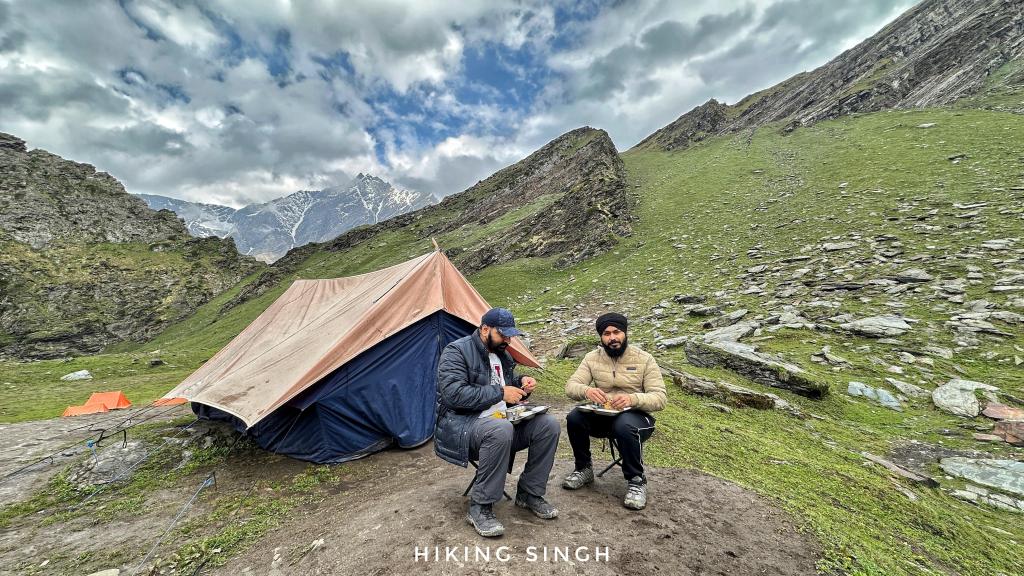
After breakfast, we started our trek towards Beas Kund. The landscape began changing as we moved higher. The relatively softer sections of the trail gave way to more rugged terrain. There were large rocks, uneven surfaces and sections that required careful footing.
The final stretch towards Beas Kund is particularly interesting because of its rocky glacial terrain. The route passes through a landscape shaped by ice, rocks and mountain streams.
As we climbed higher, the views became increasingly spectacular. The mountains seemed to rise all around us. Every few minutes, I found another reason to stop, take out my camera and capture the scenery. Sarbjit and I continued walking together, sharing conversations and enjoying the experience. Finally, we reached Beas Kund. Standing there was a special feeling.
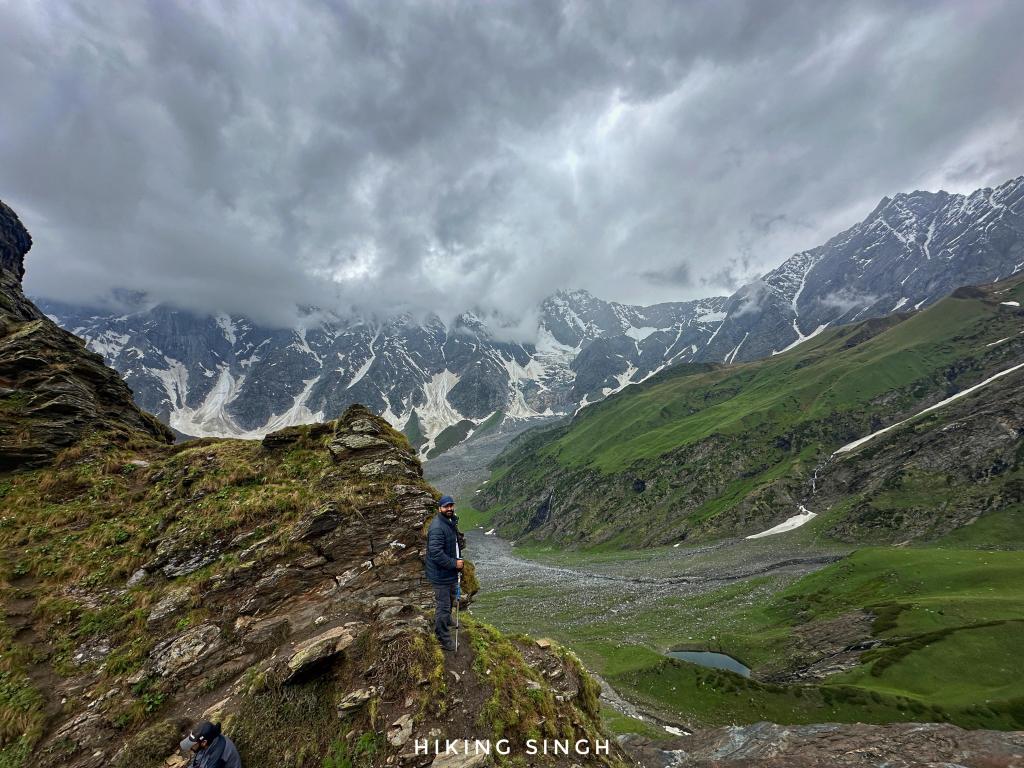
Beas Kund is a beautiful high-altitude glacial lake, generally placed at around 3,700 metres above sea level. It is traditionally associated with the source of the Beas River. One of the most spectacular aspects of the Beas Kund trek is the breathtaking mountain panorama that unfolds as you approach the lake. Beas Kund is not just about the beautiful glacial lake; it is also about being surrounded by some of the most impressive peaks of the Pir Panjal and Greater Himalayan landscape.
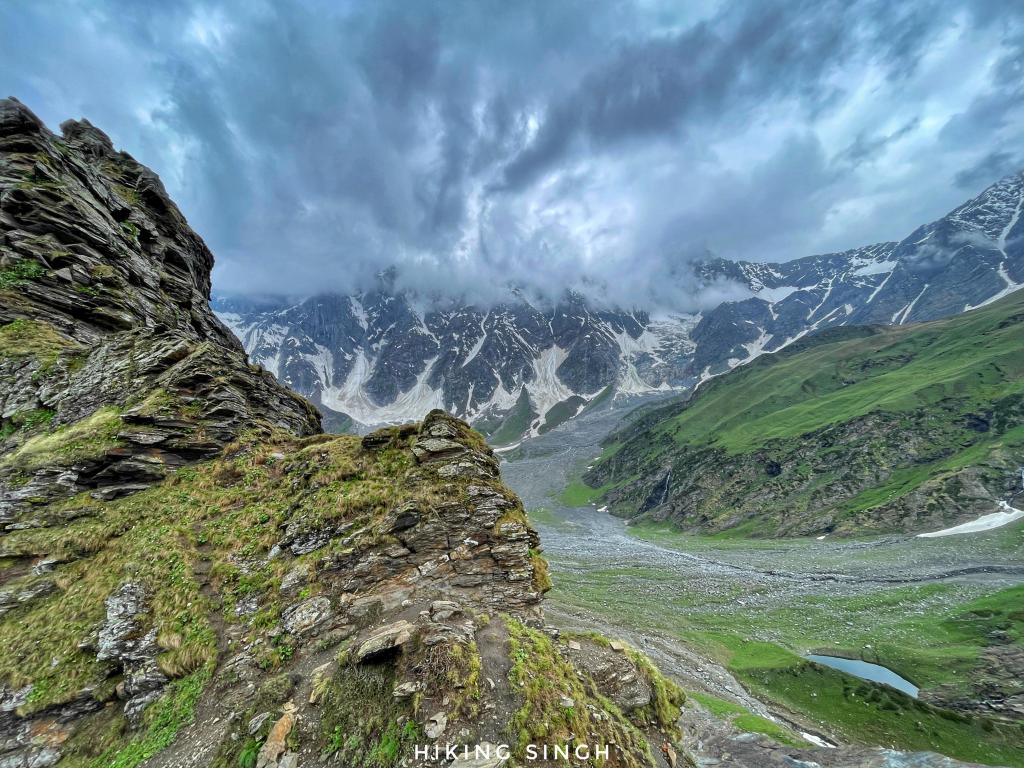
The Magnificent Himalayan Peaks Around Beas Kund
Some of the prominent peaks in the Beas Kund region include:
1. Hanuman Tibba: Approximately 5,982 m
One of the most prominent and impressive peaks in the region. Its massive snow-covered slopes dominate the mountain skyline and make it a spectacular subject for photography.
2. Friendship Peak: Approximately 5,289 m
A popular mountaineering objective near Solang Valley. The peak is particularly significant because Lady Leg, where we camped, is associated with the approach and base camp area for Friendship Peak expeditions.
3. Shitidhar Peak: Approximately 5,290 m
Another striking mountain in the Beas Kund region. Its rugged ridges and snow-covered upper slopes add to the dramatic Himalayan scenery.
4. Ladakhi Peak: Approximately 5,342 m
Known for its rugged mountain profile, Ladakhi Peak is another prominent summit visible from the Beas Kund mountain basin.
5. Deo Tibba: Approximately 6,001 m
A magnificent high Himalayan peak. It may be visible from certain viewpoints on the wider Beas Kund trail on exceptionally clear days, although it is not guaranteed to be visible directly from the lake. For a mountain and photography enthusiast like me, this was a dream setting. I found myself constantly looking around, trying to capture the beauty of every peak from a different angle.
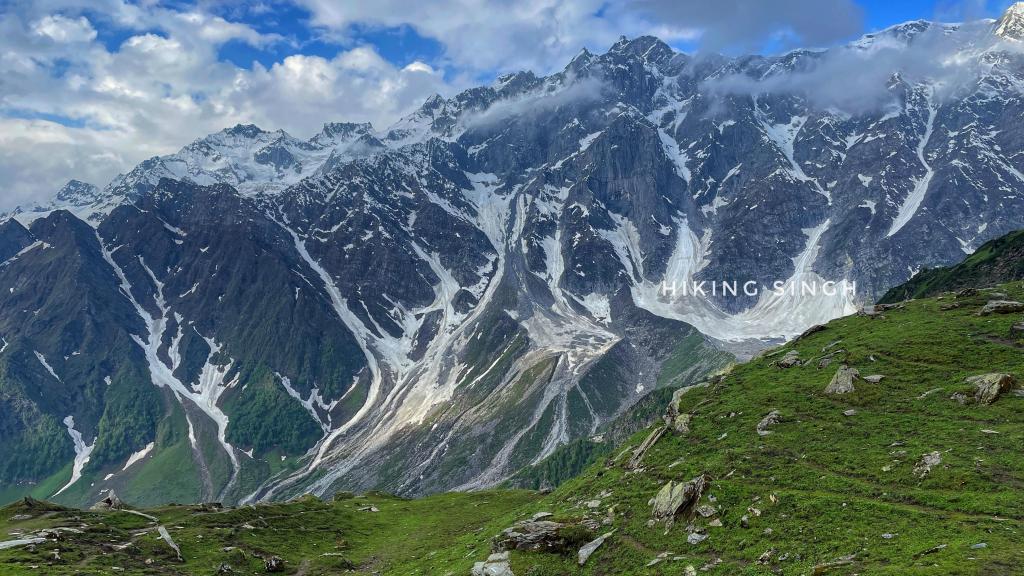
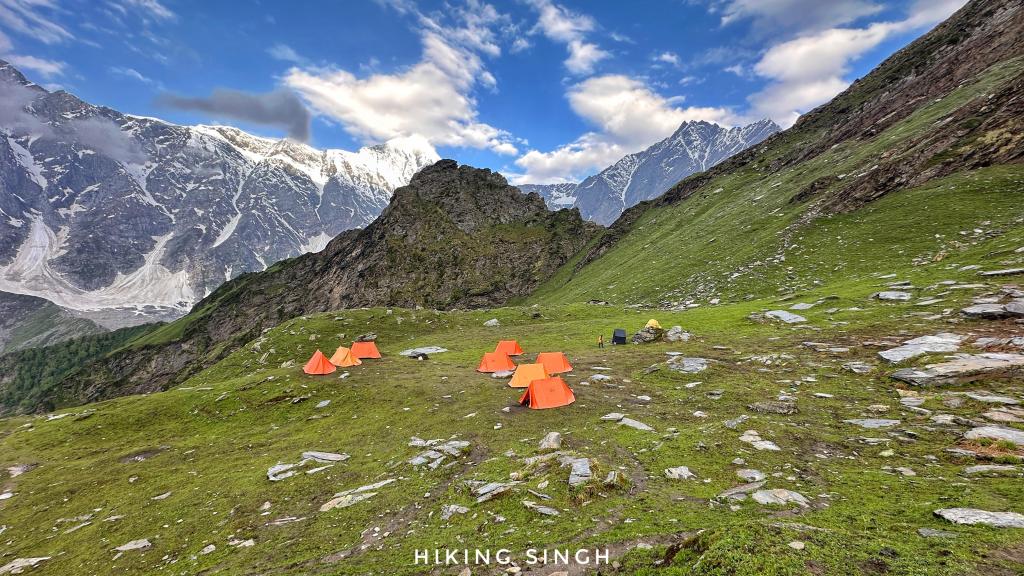
It was one of those places where you don’t really know where to point your camera because every direction offers another beautiful composition. The still waters of the glacial lake, the rugged mountain terrain and the towering snow-covered summits created a picture-perfect Himalayan landscape.
Standing there, surrounded by these mountain giants, I realized that the journey to Beas Kund was as much about witnessing the mountains as it was about reaching the lake itself.
We spent some time exploring the area and clicking photographs. I wanted to capture as much as possible because moments like these are not part of everyday life. The beauty of the landscape, the fresh mountain air and the satisfaction of completing the trek made the entire journey worthwhile.
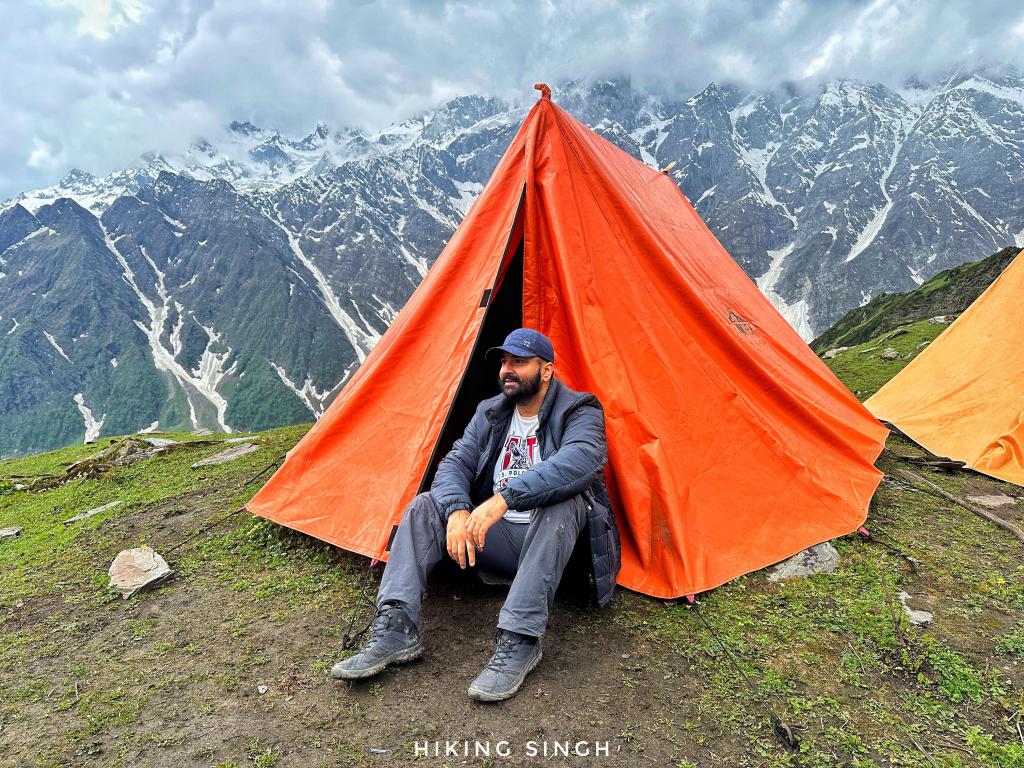
After spending some quality time at Beas Kund, we began our descent towards Dhundi. Descending through rocky terrain also required concentration, particularly after the previous day’s rain. We took our time and eventually made our way back to the starting point at Dhundi village.
From Dhundi, we took a shared jeep to Manali . By the time we reached Manali, we had completed a wonderful mountain adventure. We then took bus to Manali and during the journey we had an interaction with local people and they informed us about village Kalath; a village with natural sulphur hot-water springs.
A Relaxing Stop at Kalath: Nature’s Own Hot Water Spa
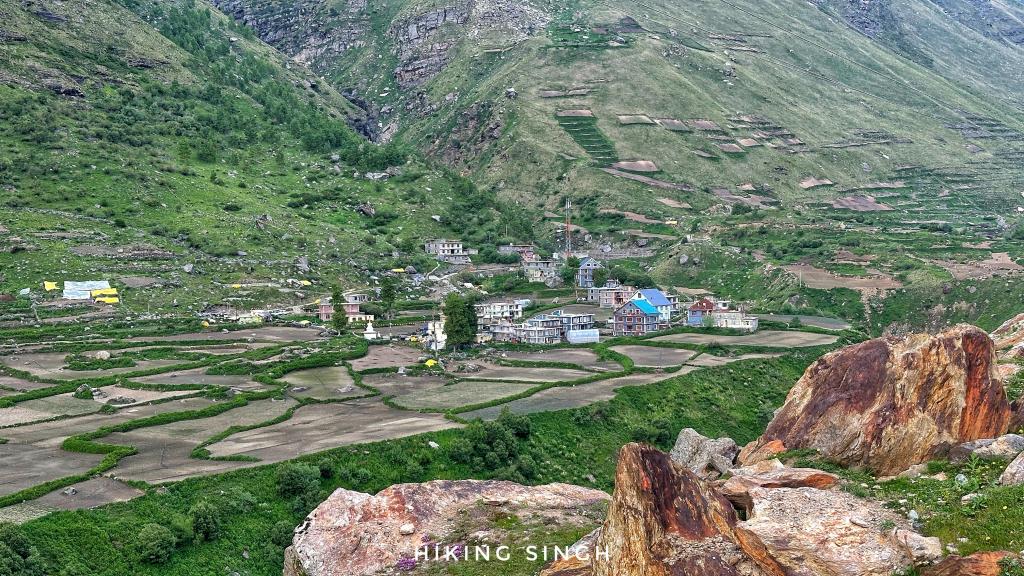
We reached Kalath village, a small place near Manali, known for its natural sulphur hot-water springs. After spending hours walking through rocky mountain trails, climbing uphill and descending through uneven terrain, a relaxing dip in naturally warm water sounded like exactly what our tired legs needed. We visited the government natural sulphur hot-water pool and enjoyed a bath there. The warm water was particularly soothing after two days of trekking. It was a wonderful way to unwind, relax our muscles and wash away the exhaustion of the trail.
There was something quite special about enjoying a warm bath surrounded by the mountains, knowing that just a few hours earlier we had been walking through the rugged landscapes around Beas Kund. Once we were refreshed, we continued our journey and took another local bus to Manali Bus Stand. With the trekking adventure behind us and our bodies feeling much more relaxed, we were ready to enjoy the evening in Manali.
By the time we reached Manali, we had completed a wonderful mountain adventure.
Evening in Manali: A New Plan Takes Shape
After returning to Manali, we decided to enjoy a relaxed evening. We went for a walk along the famous Mall Road, Manali. After spending time in the mountains, walking through a lively town felt like returning to another world. There were tourists everywhere, shops, cafés, restaurants and the usual evening hustle and bustle.
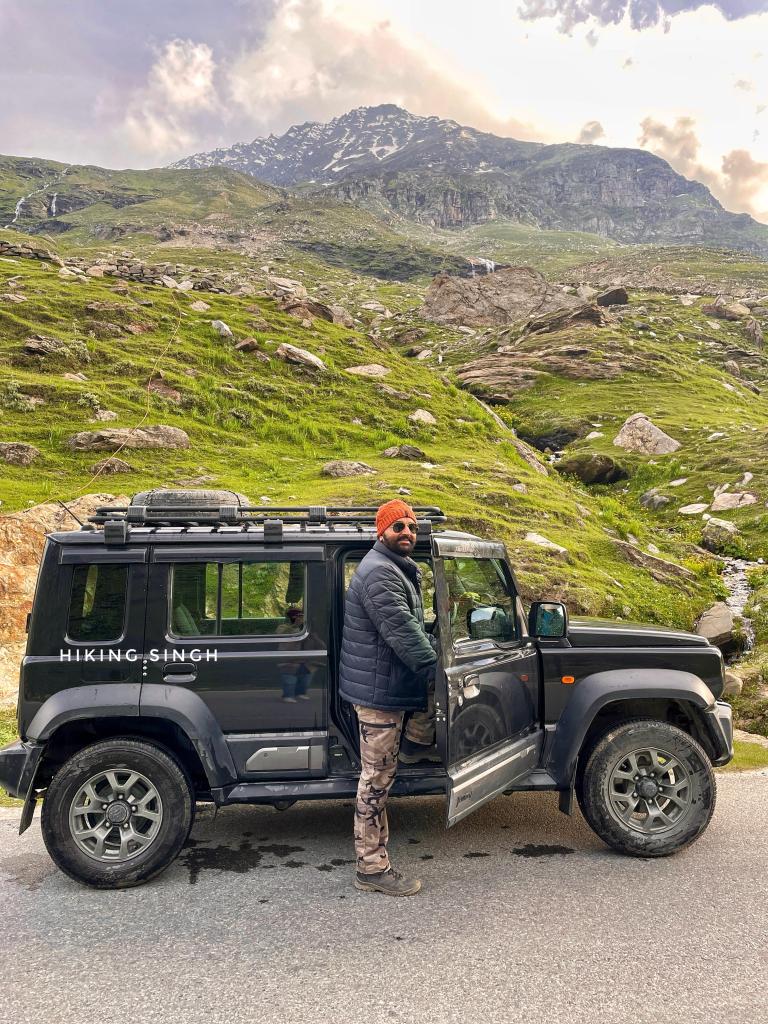
During our conversation, we started discussing what to do next. Sarbjit’s birthday was the following day. Rather than simply spending it in Manali, we came up with an idea. Why not celebrate his birthday at Chandrataal Lake? It sounded like a perfect plan. We decided to hire a Jimny for ₹9,500 and head towards Chandrataal the next morning.
It was a spontaneous decision, but sometimes the best travel memories come from plans made without much planning. And so, our Beas Kund trek unexpectedly turned into a Chandrataal road trip!
Day 3: A Birthday Road Trip to Chandrataal – An Adventure Beyond the Trek
The morning of 19 June 2026 started with a different kind of excitement. We had a long road journey ahead of us, and our destination was the beautiful Chandrataal Lake.
We started our journey from Manali in the Jimny we had hired. I had heard a lot about the road conditions towards Chandrataal, but experiencing them was something else altogether. The roads were in terrible condition at several stretches. In some places, there was barely a recognizable road. We encountered rough, uneven tracks, loose stones and challenging sections where the driver had to manoeuvr the vehicle very carefully.
It was a proper mountain driving experience!
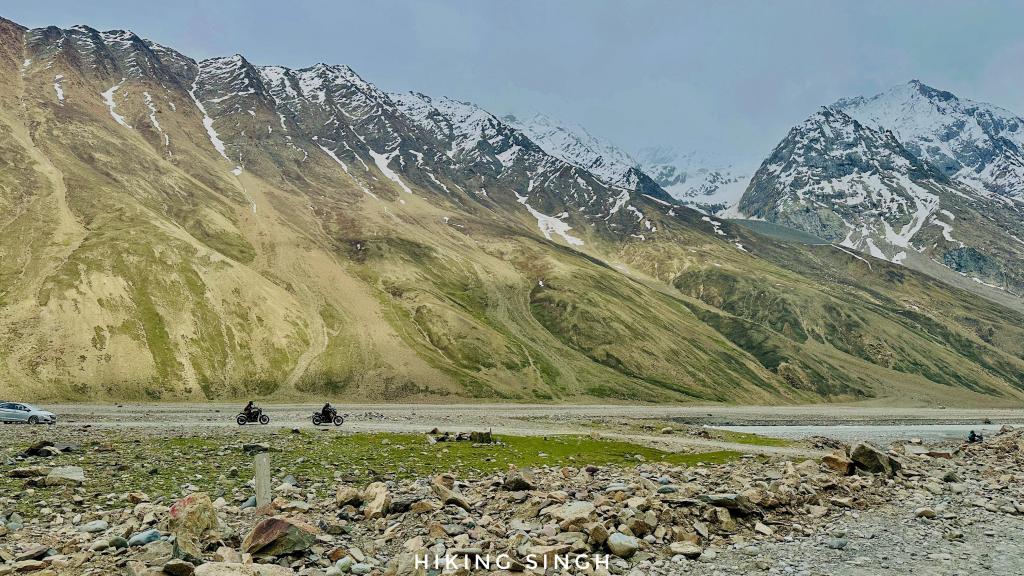
But the scenery made every difficult kilometer worthwhile. As we moved towards the Lahaul-Spiti region, the landscape changed dramatically. The green mountain slopes gradually gave way to barren mountains, rugged terrain and vast open valleys. We passed through some incredible mountain landscapes, with the river flowing alongside us for much of the journey.
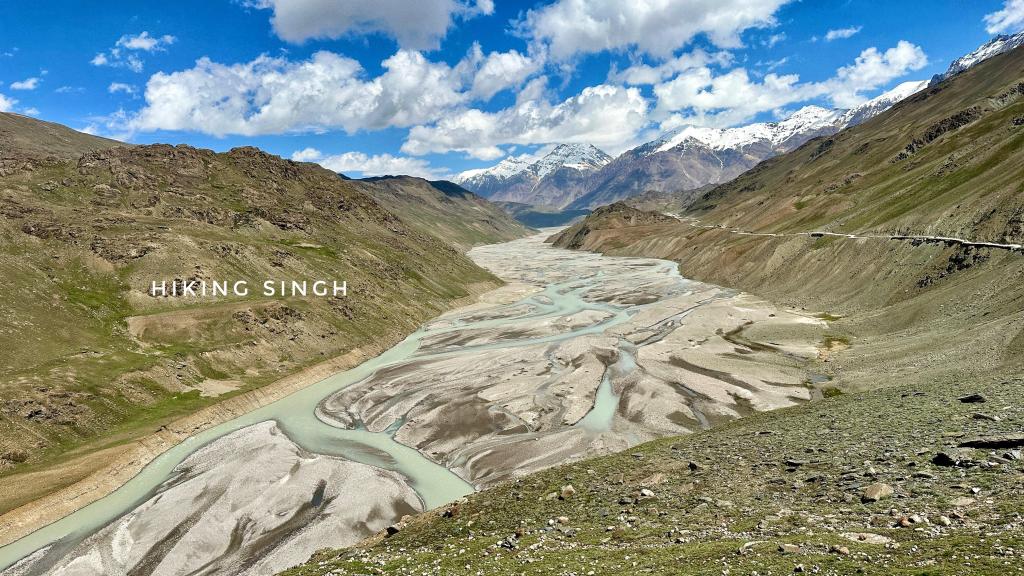
A stop at the legendary Chacha Chachi Dhaba, Batal. One of the highlights of the road journey was our stop at the famous Chacha Chachi Dhaba at Batal. For anyone travelling towards Chandrataal or exploring the Spiti region through this route, Chacha Chachi Dhaba is a place that deserves a special mention. The dhaba is known not just for its food but also for the warmth and hospitality of the couple who have helped countless stranded travelers over the years.
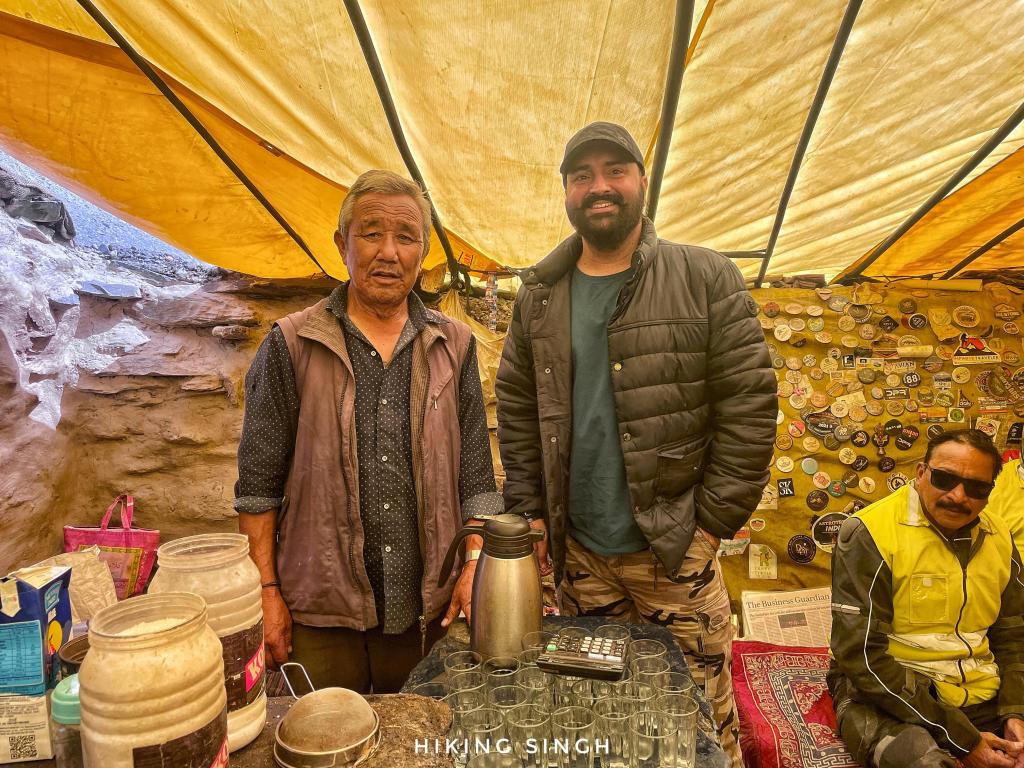
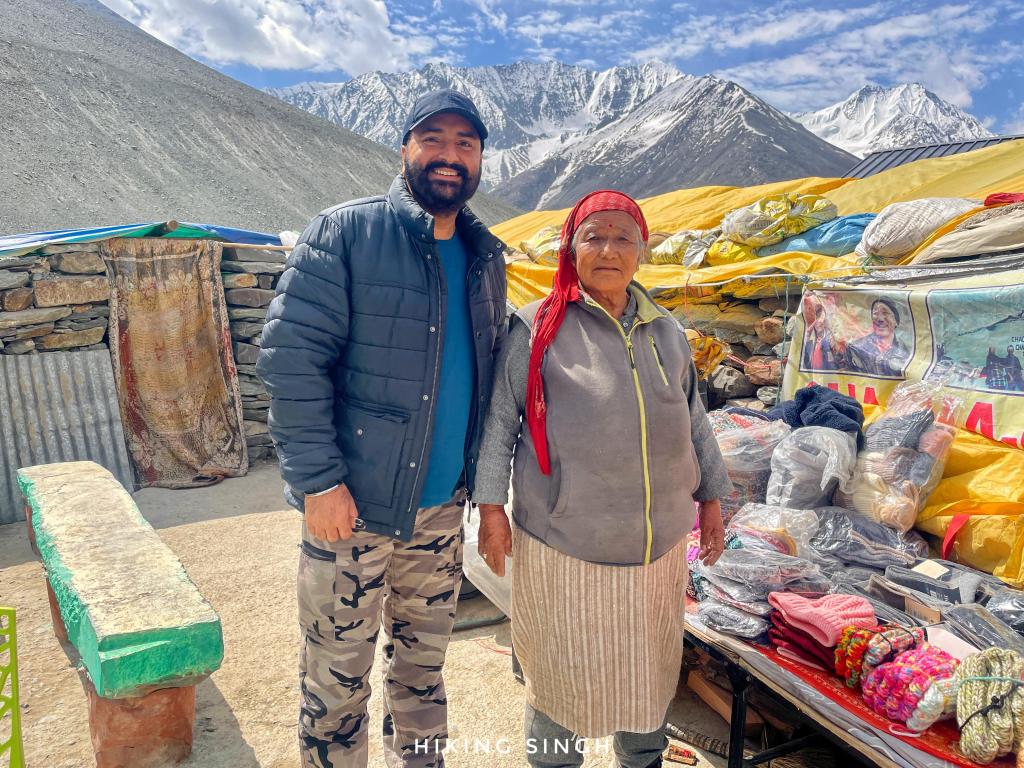
We stopped there, had some good food and spent a little time interacting with Chacha and Chachi. It was a lovely experience meeting people who have become such an important part of the mountain travel community. After spending some time there, we continued our journey towards Chandrataal.
Finally, Chandrataal!
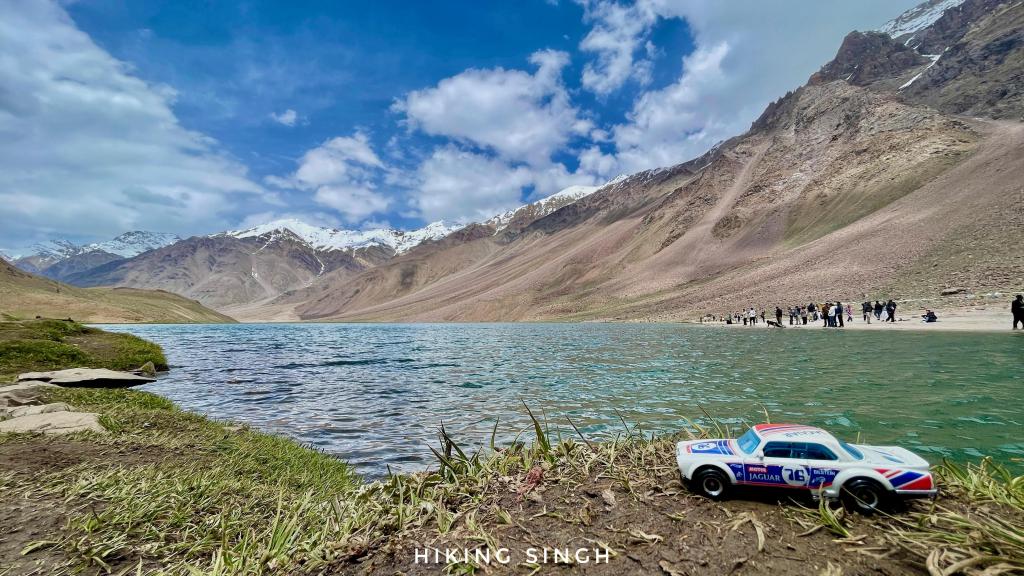
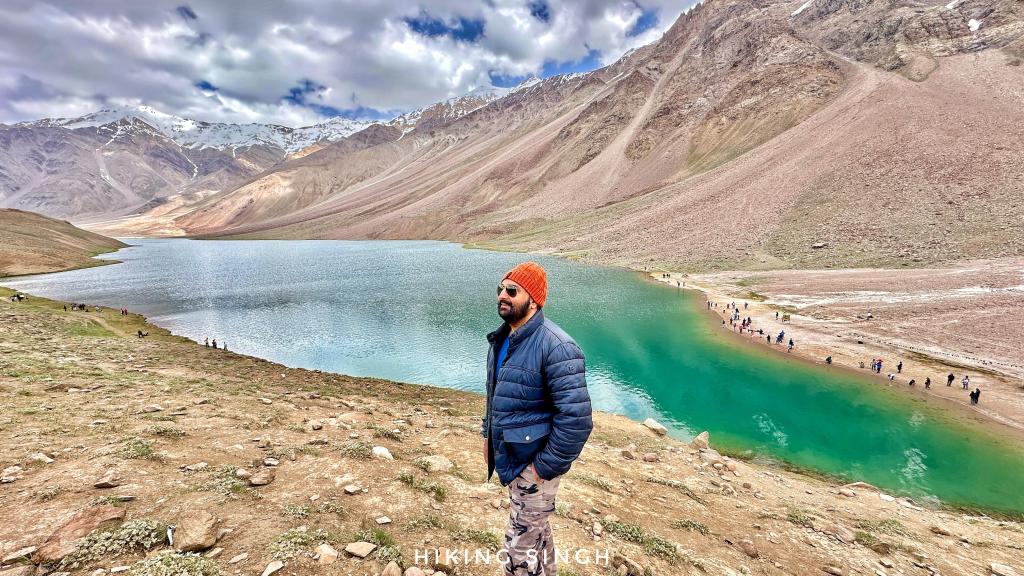
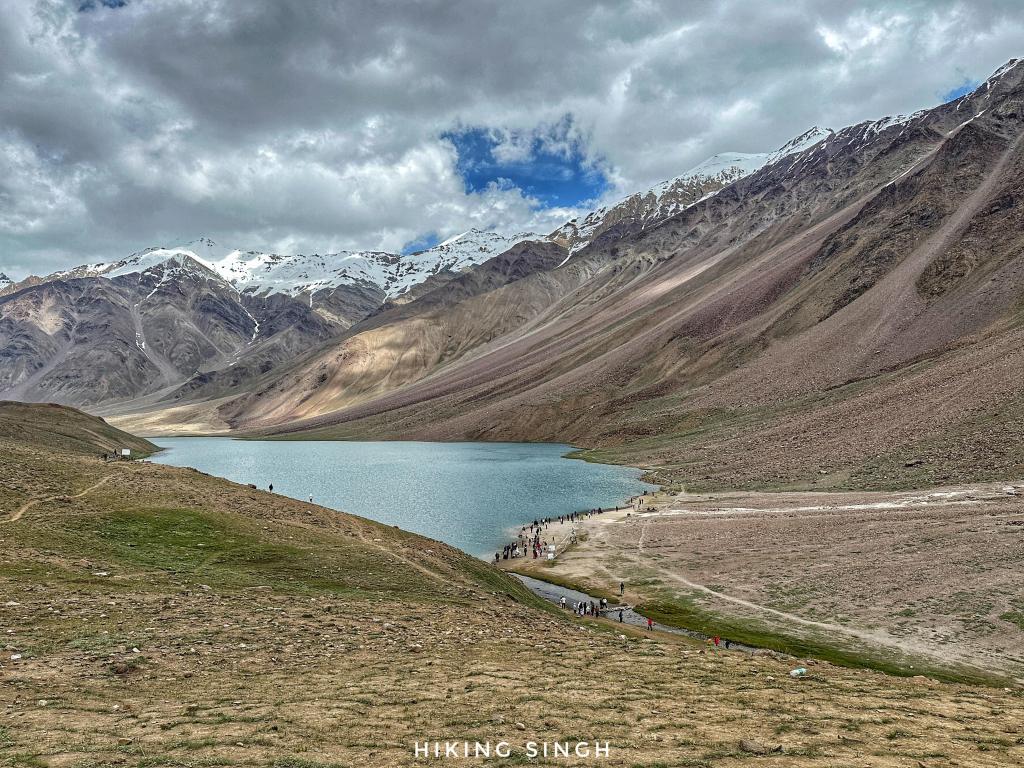
After navigating the difficult mountain roads, we finally reached Chandrataal at around 10:40 AM. The moment we arrived, all the exhaustion of the road journey seemed to disappear. The lake looked absolutely beautiful.
Chandrataal, popularly known as the Moon Lake, is one of the most spectacular high-altitude lakes in Himachal Pradesh. Its crescent-shaped appearance and changing shades of blue and turquoise make it a favorite destination for mountain lovers and photographers.
The lake sits at an altitude of approximately 4,300 meters and is surrounded by barren mountain slopes that create a dramatic landscape. The timing of our visit made it even more special. We were there to celebrate Sarbjit’s birthday!
What could be a better birthday celebration than spending the day beside a beautiful Himalayan lake? We wished him a happy birthday and enjoyed the moment together. There was no elaborate celebration, no fancy restaurant and no birthday decorations. Just mountains, a cake cutting ceremony, a beautiful lake, fresh air and good company.
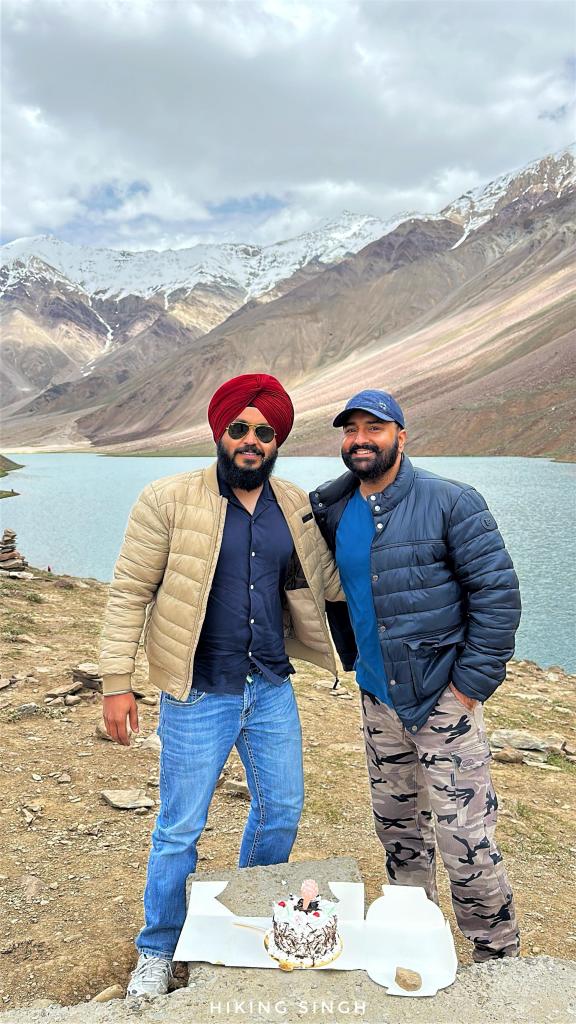
Sometimes, the simplest celebrations become the most memorable ones. We walked around the lake, explored different viewpoints and spent time enjoying the peaceful surroundings. As usual, my camera was busy capturing everything. We clicked some beautiful photographs and enjoyed the incredible views from different angles.
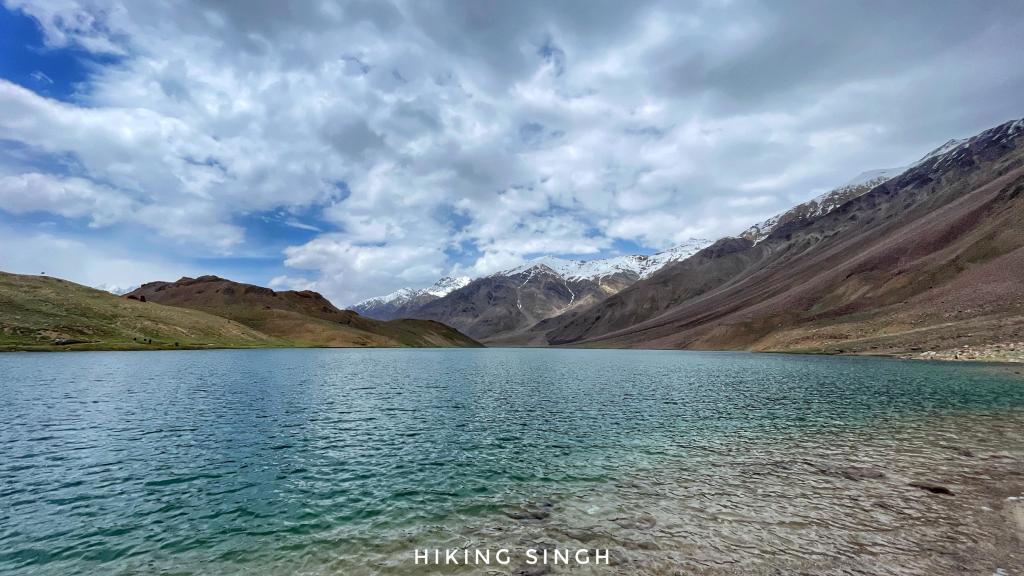
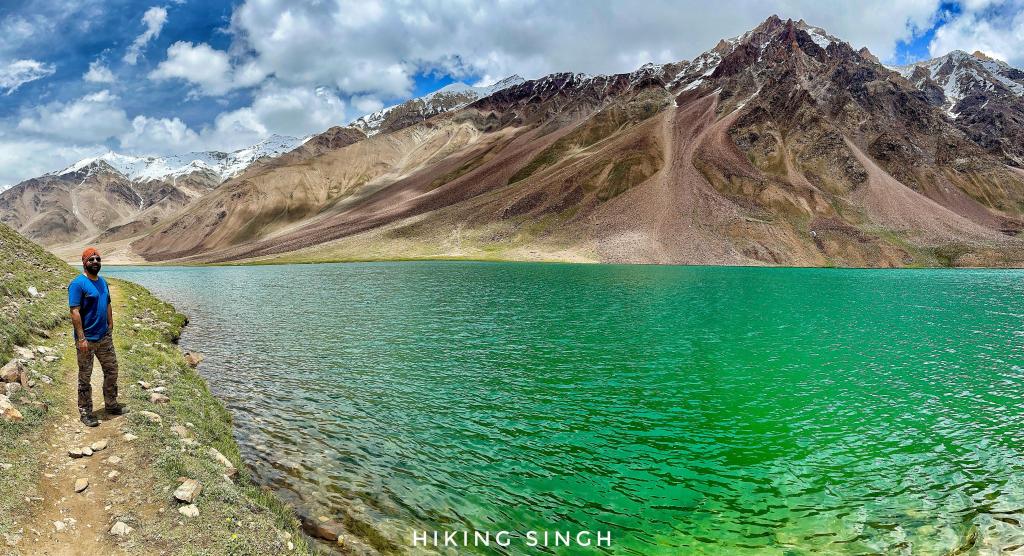
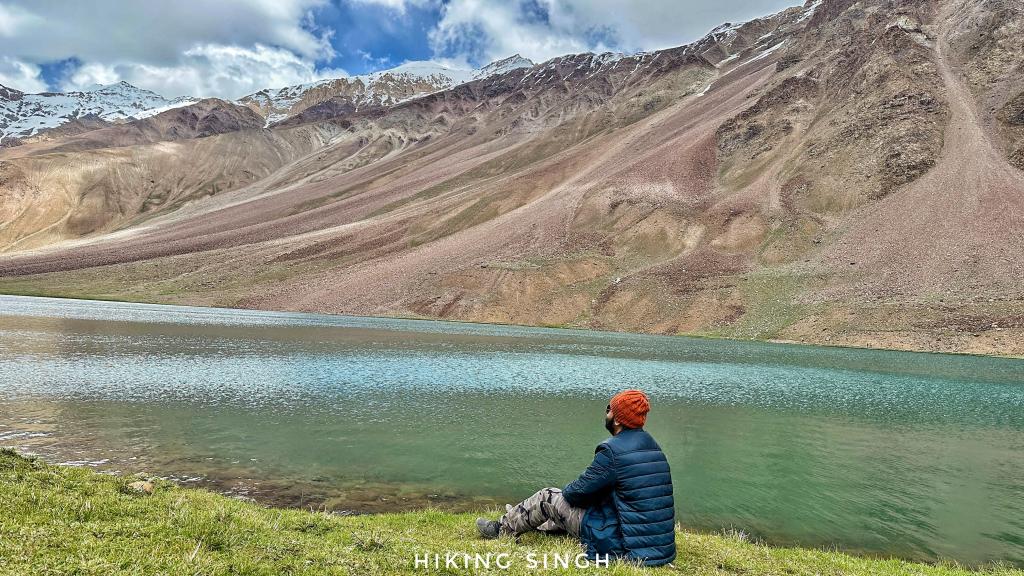
The lake looked different from every viewpoint. Its colors changed with the light, while the surrounding mountains added a dramatic backdrop. For someone who loves trekking, mountains and photography, this was a perfect experience. After spending a few wonderful hours at Chandrataal, we finally decided to leave at around 2:00 PM.
The return journey: Rivers, valleys and mountain landscapes
The return journey was equally beautiful. As we drove back, we got some stunning views of the Chandra River and the surrounding valleys. The river flowing through the barren landscape looked spectacular. The contrast between the turquoise water, rocky riverbanks and enormous mountain walls was something worth remembering.
We also witnessed the beautiful river landscape around the Chandra-Bhaga river system. The Chandra and Bhaga rivers meet at Tandi, where their combined flow is known as the Chandrabhaga, which is called the Chenab further downstream.
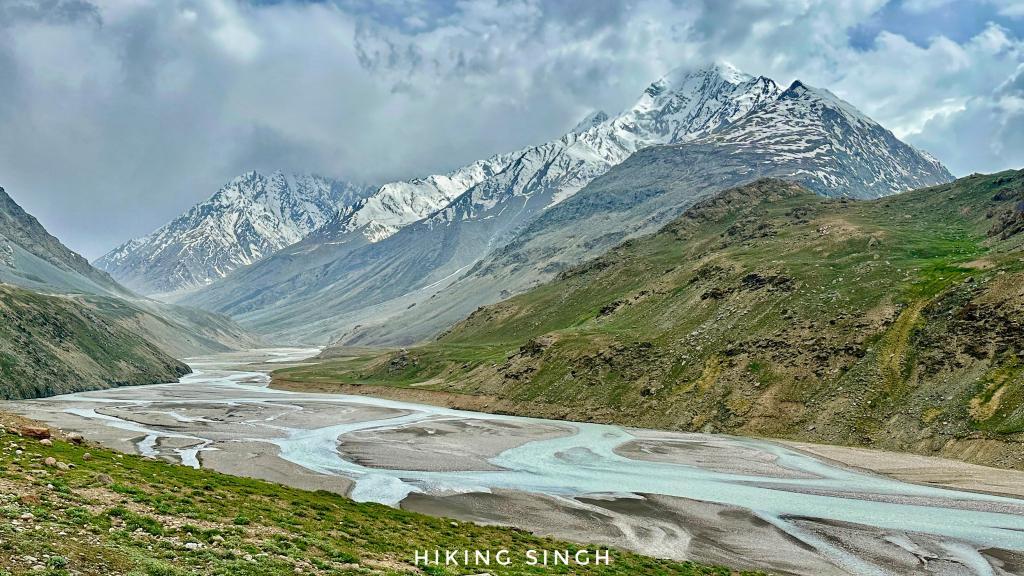
We stopped for lunch somewhere along the route and enjoyed a much-needed break before continuing towards Manali. The road journey was long, tiring and challenging, but the scenery kept us entertained throughout. Finally, we reached Manali Bus stand at around 9:00 PM.
An unexpected final twist: Four travelers, one cab and a journey back home. By the time we reached Manali bus stand, we were looking for a bus back to Chandigarh. We noticed two more travelers waiting at the bus stand. They were also trying to get a bus but, because of the heavy influx of trekkers and tourists, they were unable to find one. It seemed like many people were heading back home after their mountain adventures. We started talking and soon realized that all four of us were in the same situation. Instead of continuing to wait for a bus, we decided to share a cab to Chandigarh. We managed to arrange a cab for ₹6,000, which we divided among the four of us.
And just like that, four travelers who had probably never met before found themselves sharing the final leg of a Himalayan journey. We started towards Chandigarh and eventually reached home late at night. We were tired, but extremely happy.
After a few days of travelling, trekking, photography, unexpected adventures and a memorable birthday celebration, it was finally time to rest.
What made this journey special?
Looking back, the Beas Kund trek was much more than simply reaching a high-altitude lake. It was about the entire experience. It was about walking through rocky mountain trails, getting caught in the rain, enjoying Maggi and tea at a campsite, and spending a night under the stars. And then came the spontaneous Chandratal road trip, the memorable stop at Chacha Chachi Dhaba, celebrating a birthday beside a Himalayan lake and finally sharing a cab with two strangers to return home.
These are the moments that make travelling special. We go to the mountains for their beauty, but often return with something much more valuable: friendships, stories and experiences that stay with us long after the journey ends.
Until the next adventure!
After reaching Chandigarh, it was time to return to our regular city lives, work schedules and everyday responsibilities. The mountains gave us beautiful views, unexpected friendships and stories worth telling.
And perhaps that is the best thing about travelling: you never really know what the next journey has waiting for you. Until then, keep exploring, keep trekking and keep collecting stories. Because the best journeys are not always about the destination. They are about everything that happens along the way.